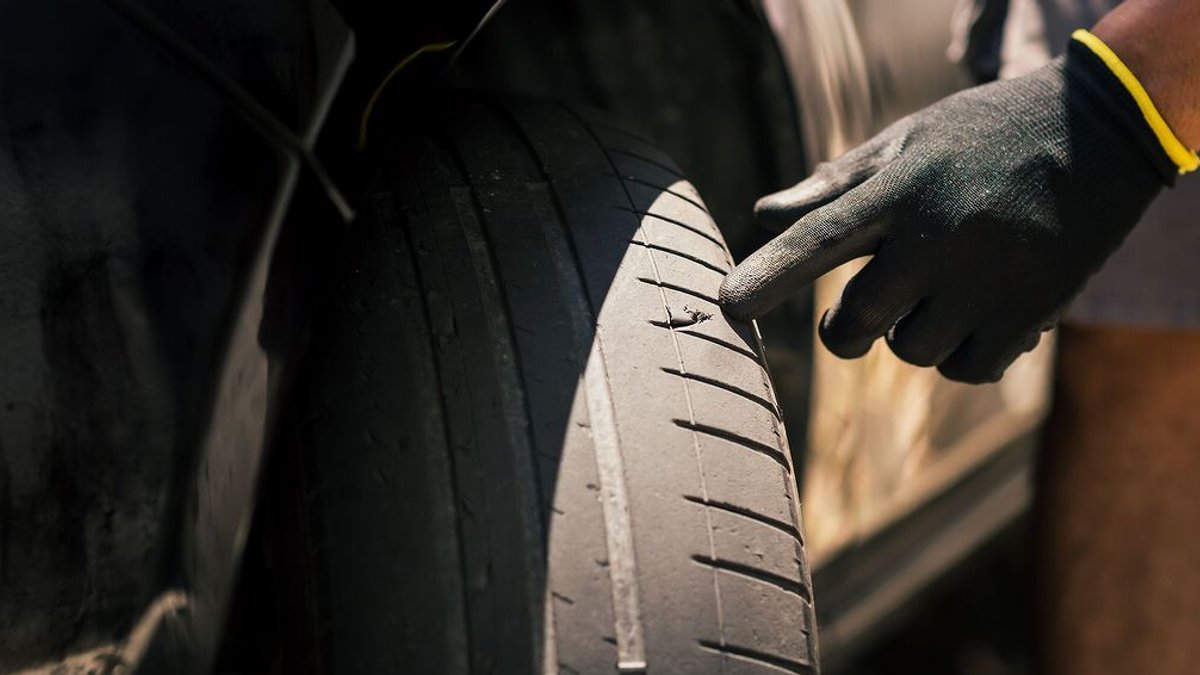
Most drivers don’t think about their tires until something goes wrong. Worn or aging rubber can turn a routine drive into a safety risk, particularly in rain, snow, or at highway speeds. Checking for warning signs doesn’t require a mechanic.
Tread depth is the first warning sign
Modern tires include built-in wear indicators—small raised bars between the tread blocks. When the tread wears down to 1.6mm (2/32 of an inch), these bars become flush with the surface, signaling replacement is needed. That’s the legal minimum, though many manufacturers suggest swapping tires sooner: 3-3.2mm for all-season or summer tires, and 4-5mm for winter versions. Winter tires often have a second set of indicators to show when they’ve lost enough tread to function safely in snow.
To locate the wear bars, look for arrows, a small logo, or the letters “TWI” molded into the sidewall. These marks point to the indicators.
Related: Mercedes Faces Potential Ban in United States
Cracks and dry rot indicate aging rubber
Tires aren’t just about tread. Over time, rubber hardens and dries out as the oils and chemicals that keep it flexible break down. Sunlight, heat cycles from underinflation, and frequent use of tire dressings can speed up this process. Inspect the sidewalls and tread blocks for small cracks—minor surface cracks are usually cosmetic, but deeper fissures mean the tire is no longer safe. The area near the bead, where the tire seals to the wheel, requires extra attention.
Age also plays a role. Even if a tire looks fine, the rubber degrades internally. The U.S. and Canada require a four-digit date code stamped on the sidewall, showing the week and year of manufacture. A code like “1822” means the tire was made in the 18th week of 2022. Most experts recommend replacing tires after six to 10 years, regardless of tread depth.
Traction loss isn’t just about tread
Some tires lose grip long before the tread wears out. High-mileage passenger and light-truck tires can harden over time due to heat cycling or design. The result is a tire that looks fine but feels slippery in wet conditions. If a car doesn’t corner or brake as confidently as it once did, the compound may have lost effectiveness.
Uneven wear patterns, like camber wear from misaligned wheels, can also reduce traction. Tires that haven’t been rotated regularly often develop bald spots, worsening handling and increasing hydroplaning risk.
Related: Mitsubishi Pajero to debut globally this autumn
Vibrations and structural damage
A shimmy or vibration at low speeds is often dismissed as a balance issue, but it could indicate something more serious. Tires with shifted belts—a structural failure where internal layers separate—can cause these symptoms. Left unchecked, the tire could fail at high speeds, leading to a blowout.
Other signs of internal damage include bulges or bubbles in the sidewall, which indicate a broken cord layer. If a mechanic confirms a shifted belt or severe out-of-round condition, replacement is necessary immediately. Patching or rebalancing won’t address the underlying problem.
Visible damage beyond punctures
A flat tire is an obvious reason for replacement, but other damage can be just as dangerous. Deep cuts, gouges, or abrasions in the sidewall or tread can weaken the tire’s structure, even if they don’t cause an immediate leak. Driving on a tire that’s been run flat—even briefly—can cause internal damage that isn’t visible from the outside. If the puncture is in an area that can’t be safely patched, like the sidewall or shoulder, the tire should be discarded.
Some damage is subtle. A tire scraped against a curb might look intact but could have hidden cracks or cord damage. When unsure, a professional inspection is the best course.
Related: Xiaomi unveils hybrid SUV to rival Zeekr
When to upgrade before problems arise
Waiting for a problem isn’t necessary to justify new tires. If the current set is nearing the end of its lifespan or better performance is desired, upgrading early is an option. Switching to a different tread pattern, a softer compound for better grip, or even a set of winter tires for colder months can improve safety and driving feel.
The best time to check tires is before noticing a problem. A quick visual inspection every few weeks—looking for uneven wear, cracks, or low tread—takes less than a minute. For drivers in snowy climates, swapping to winter tires before the first frost prevents last-minute scrambles. Planning a road trip? A pre-trip check could avoid breakdowns far from home.
Tires are the only part of a vehicle that touches the road. Neglecting them risks losing control when it matters most.


