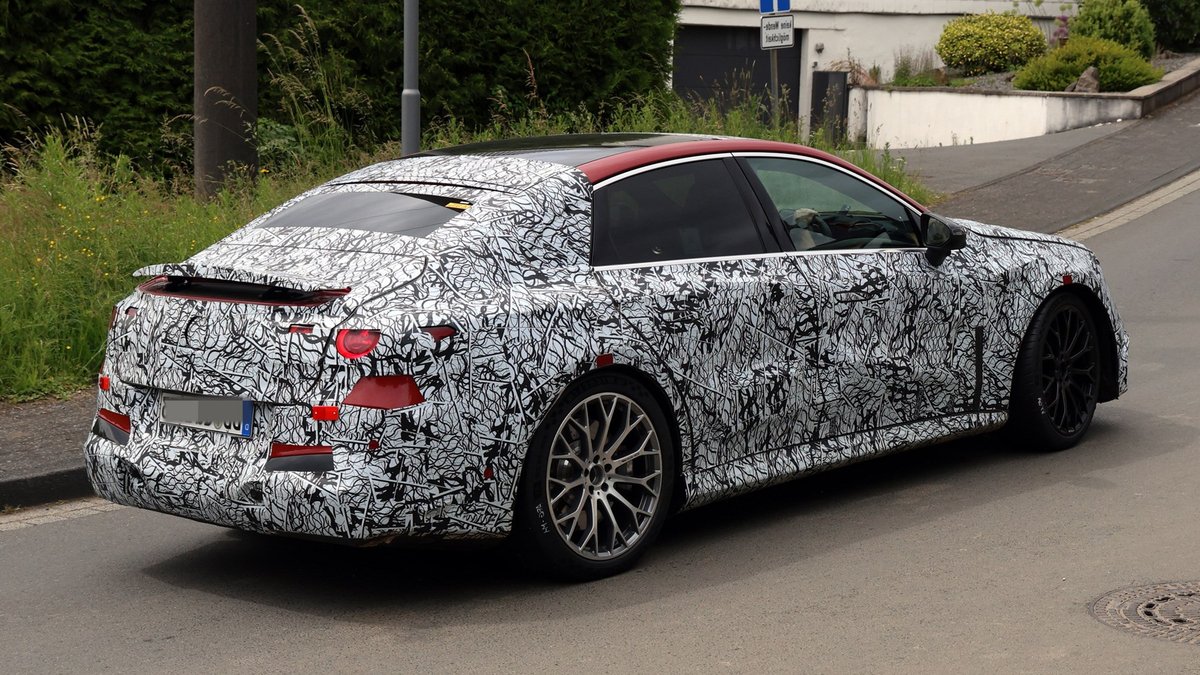
Mercedes-AMG is preparing an all-electric version of the C-Class that could redefine what performance means for the brand. Spy photographers have captured the performance sedan testing with no exhaust pipes, signaling a significant shift in AMG’s powertrain strategy.
Electric powertrain confirmed in testing
The prototype wears heavy camouflage but reveals unmistakable AMG styling cues. The bodywork appears wider and more aggressive than the standard C-Class, sitting noticeably lower on its suspension. The front end shows an expanded stance between the headlights and surrounding panels, while the rear displays an active spoiler and the signature three-pointed star taillights. The wheels hide a substantial set of brake discs, indicating the performance intent of the vehicle. The absence of exhaust pipes confirms what AMG sources have hinted at: this C63 will run entirely on electric power, not a combustion engine or hybrid system.
Substantial brake discs sit behind the wheels, showing the performance intent. The absence of exhaust pipes confirms what AMG sources have hinted at: this C63 will run entirely on electric power, not a combustion engine or hybrid system. The use of axial flux motors, developed by British firm YASA (which was purchased by Mercedes-Benz in 2021), allows for tremendous power output from a relatively small package. These motors are expected to deliver up to 800 brake horsepower, meeting AMG’s goal of creating an electric powertrain that matches the performance of traditional V8 engines.
The electric C63 is expected to feature three axial flux motors paired with all-wheel drive. These compact yet powerful units were developed by British firm YASA, which Mercedes-Benz acquired in 2021. The technology allows tremendous power output from a relatively small package. Performance targets suggest the sedan will produce more than 800 brake horsepower. AMG’s leadership has stated publicly that this axial flux technology must become the electric equivalent of the traditional V8 engine. To meet that standard, engineers are working on synthetic sound and artificial vibration systems designed to evoke the visceral responses drivers expect from high-performance AMG vehicles.
Related: Range Rover launches electric version of luxury icon
Beyond the powertrain, the vehicle is likely to receive bespoke air suspension with active ride control and anti-roll technology. This system will allow the car to adapt to different driving conditions and styles, providing a comfortable ride in normal circumstances and a sporty feel when the driver demands more performance. Rear-wheel steering should improve agility and responsiveness through corners, enhancing the overall driving experience.
Market necessity drives the strategy
The electric C-Class arrives after a difficult chapter for the AMG lineup. The previous generation C63 used a four-cylinder plug-in hybrid powertrain that failed to resonate with buyers. Sales proved disappointing enough that AMG committed to maintaining combustion power for other models in the near term. This electric version represents a course correction, demonstrating AMG’s commitment to staying ahead of the industry’s shift towards electric vehicles.
Industry observers note that AMG’s hand has been forced by broader regulatory pressures and the competitive market. BMW is developing its own high-performance electric sedan, the i3M, which will compete directly with this Mercedes offering. To maintain its position as a leader in the luxury performance segment, AMG must offer a compelling electric alternative to its traditional internal combustion engine vehicles.
The reveal is expected before the end of 2026, with sales likely beginning in 2027. Pricing and specific specifications remain under wraps, but the company appears committed to proving that electric powertrains can deliver the character AMG customers expect. The upcoming C63 AMG will not only need to match the performance of its competitors but also capture the spirit of what makes an AMG vehicle special, despite the absence of a traditional internal combustion engine.


