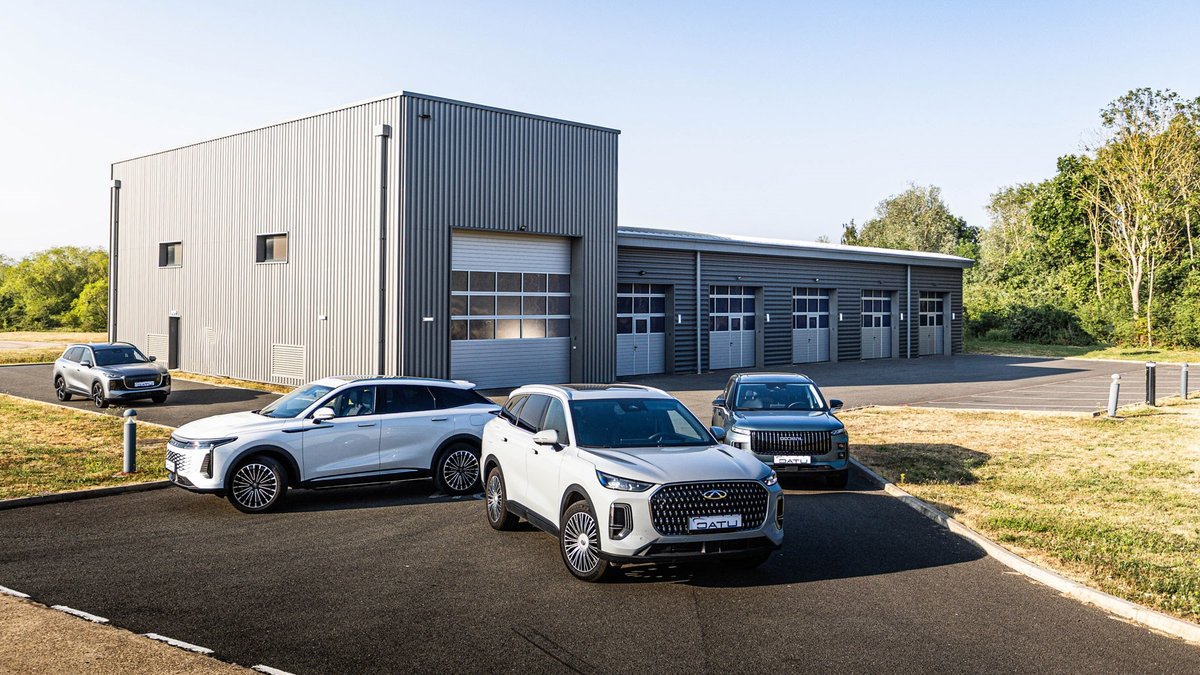
Chinese automaker Chery is establishing its first UK research and development center in Bedfordshire to better suit vehicles for European drivers. The facility, scheduled to open in late autumn 2026 at UTAC Millbrook, will work on chassis behavior and driver-assistance system calibration.
The decision stems from Chery’s effort to match local preferences—quicker steering, firmer suspension, and smoother cornering on narrow roads. While the company already incorporates some UK feedback, the new center aims to bridge the gap between customer insights and engineering.
Chery intends to use the location to refine models across its brands—OMODA, JAECOO, Chery, and Lepas—though no specific vehicle has been named for initial development. The project is expected to generate jobs in engineering, autonomous driving, and artificial intelligence.
Peter Matkin, Chery’s engineering chief, has championed the shift. With 15 years at Jaguar Land Rover before joining Chery, he brings a clear understanding of European driving expectations. His task involves guiding Chinese engineers beyond their domestic market mindset.
“They don’t understand what I’m talking about,” Matkin said during the launch of Chery’s Lepas brand. “They think something’s wrong with me.”
Related: New Alpina B3 saloon debuts in Tokyo alongside Touring
China’s road infrastructure—flat, grid-based layouts with strict traffic enforcement—contrasts sharply with Europe’s varied terrain. Matkin has taken engineers on drives through the Alps and Germany’s autobahns to demonstrate real-world conditions. “Let them feel what it’s like hitting 180 on the autobahn when a truck suddenly changes lanes,” he said. “Or handling an unlit, twisting road at 100 km/h.”
Chinese vehicles often lead in value and technology but fall short in driving feel. Matkin describes improving this as a major effort—not just for enjoyment but for safety. Driver-assistance systems, for instance, can be overly restrictive. “In China, safety is the top priority,” he said. “But drivers here don’t want constant interference. They want to keep moving.”
To address these differences, Chery is partnering with European universities and engineering firms to fine-tune calibration.
The approach aligns with broader industry shifts. Other Chinese automakers, including BYD and NIO, have set up European R&D centers to adapt development. Chery’s method stands out for its emphasis on direct experience—taking engineers to the roads they’re designing for rather than relying only on data.
While the project focuses on technical adjustments, it also highlights a cultural shift. Engineers accustomed to China’s controlled driving environments must now account for Europe’s diverse conditions. The hands-on approach extends beyond vehicles, shaping how teams collaborate across continents.


