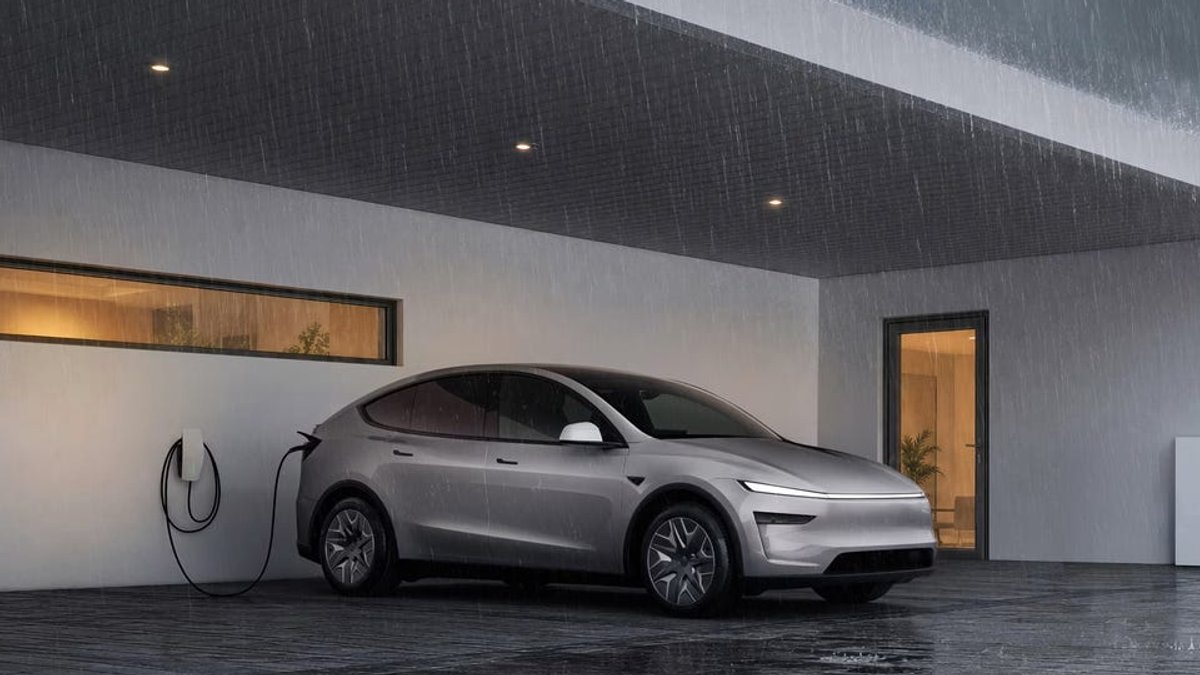
Tesla has introduced vehicle-to-home (V2H) bidirectional charging for its Model 3 and Model Y vehicles. This feature, already available on the Cybertruck, allows these electric vehicles to supply electricity to a home during power outages. Tesla says that all Model 3 and Model Y vehicles ordered in the U.S. after October 1 will have this capability, as will some vehicles produced before this date. Owners can check their vehicle’s compatibility by accessing the Powershare Support option under the Software menu’s Additional Vehicle Information screen.
To enable this capability, the home must have a Powerwall 3 battery backup system and a compatible Tesla Wall Connector. The feature requires a new piece of hardware, the PCS2 Lite inverter, which is related to the inverter used in the Cybertruck but with specific differences. The PCS2 Lite is designed to work seamlessly with the Powerwall 3 and either a Tesla Universal Wall Connector or Gen 3 Wall Connector, though support for older Powerwall versions is expected soon.
New Hardware, New Possibilities
The PCS2 Lite inverter is the key component enabling V2H functionality in the Model 3 and Model Y. While the Cybertruck can supply power directly to a home, these models require the Powerwall 3 and a compatible Wall Connector. The PCS2 Lite ensures that the vehicle’s battery acts as a secondary backup, providing flexibility during outages without permanently tethering the car to the home.
The Powerwall 3 installation can be costly, potentially running into five figures, depending on the home setup. This system includes a battery on the home side, with the vehicle’s battery acting as a secondary backup. During an outage, the vehicle supplies electricity to the home and recharges the Powerwall, ensuring continuous power without indefinitely tethering the car to the home. This setup allows homeowners to maintain essential functions without relying solely on the grid.
Power and Compatibility Details
The amount of power a vehicle can supply depends on its battery size and state of charge. Tesla estimates that the standard battery pack in the Model 3 and Model Y can extend an average home’s backup by about two days. The larger battery packs in the Premium and Performance models can provide more than two days of additional power. The Cybertruck, with its larger battery, can add over three days of backup power. This capability is particularly valuable during extended outages, offering homeowners greater energy independence.
The maximum power draw is 11.5 kW, which is higher than some other automakers’ V2H implementations. This feature is a significant addition, especially considering that some competitors have offered V2H for years. Tesla’s energy arm announced the update shortly after introducing improvements to the Model 3, including a larger touchscreen, improved acceleration, and a range boost for the Performance model. The timing highlights Tesla’s commitment to enhancing both its vehicles and energy solutions.
Retrofit Potential for Older Models
Owners of older Model 3 and Model Y vehicles may have the option to upgrade their systems. Tesla’s service documentation includes a draft procedure to retrofit a Model Y with the PCS2 Lite hardware. However, it remains unclear if this upgrade will be available for the Model 3 or if Tesla will offer it to customers. The feasibility of retrofitting suggests that Tesla is exploring ways to extend V2H capabilities to a broader range of its vehicles, though official confirmation is pending.


