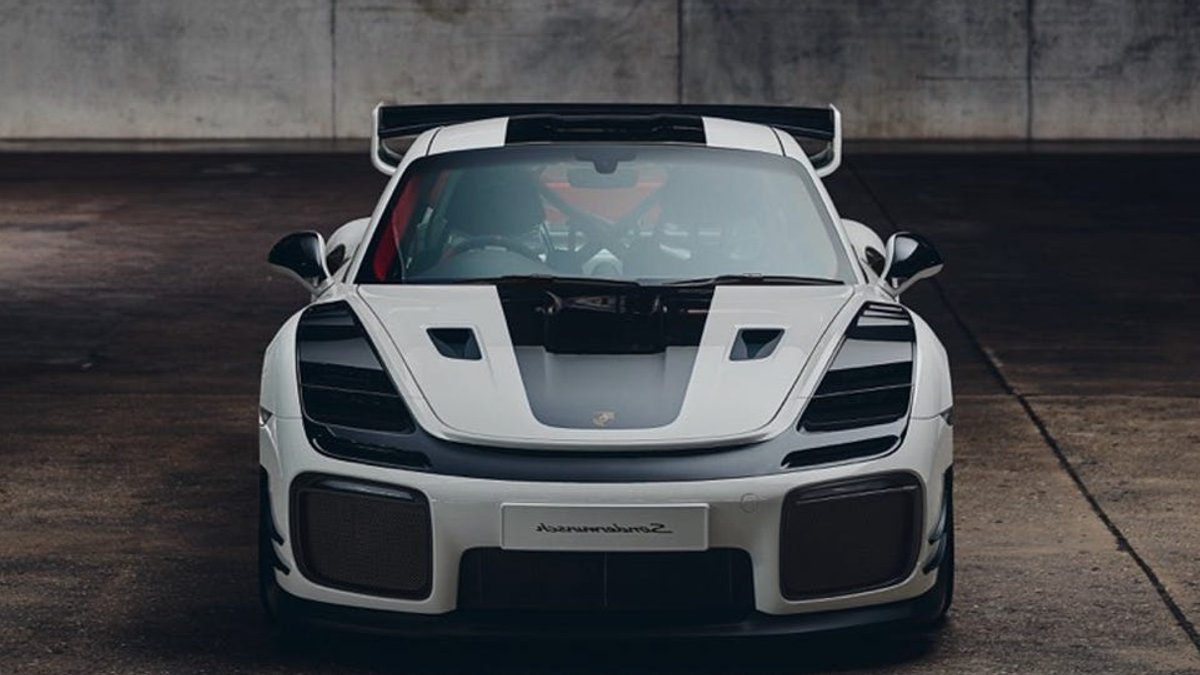
Porsche is doubling down on exclusivity, premium pricing, and a return to its performance-driven heritage while overhauling its business model to reverse years of declining profitability. The automaker has rolled out a new strategy focused on limited-edition vehicles, bespoke commissions, and a mid-engine supercar platform—all while aggressively cutting costs to restore financial health after profits plummeted from $5.9 billion in 2024 to just $101 million the following year. Under CEO Michael Leiters, the brand is abandoning its earlier push into mass-market electrification in favor of a leaner, higher-margin approach centered on sports cars and handcrafted engineering.
Leiters outlined the pivot during a Stuttgart event, admitting that Porsche’s heavy investment in electric vehicles, including the Taycan, had failed to align with consumer demand. High U.S. tariffs and fierce competition in China further eroded profitability. The new plan, called Sportwagenschmiede ’35, shifts focus to limited-run models, custom commissions, and a lineup that prioritizes revenue over sales volume. The strategy marks a deliberate retreat from Porsche’s earlier ambitions to compete in the electric SUV segment.
Mid-Engine Supercar Architecture Unveiled
At the heart of the revival is a new mid-engine supercar architecture, which will be previewed by the Mission S concept car set to debut on October 15. If commercialized, this platform could produce a model positioned above the iconic 911. Before that, Porsche must address two major gaps created by recent discontinuations: the gas-powered Macan and the 718 Boxster/Cayman lineup.
The electric 718 will arrive in 2027 as the successor to the discontinued two-seaters, available as a Boxster convertible and Cayman coupe. Leiters confirmed the model will be electric-only, eliminating earlier discussions of gasoline variants. U.S. deliveries are planned for late 2025. A new gas-powered Macan, developed in partnership with Audi, will follow in 2028 in both pure-gas and plug-in hybrid forms. This model targets buyers reluctant to adopt full electrification, while Porsche has also hinted at an upcoming SUV in the D-segment, above the Cayenne, though no details have been finalized.
Balancing Gas, Hybrid, and Electric Lineup
While Porsche is scaling back its electric ambitions, it is not abandoning the segment entirely. The 911 will remain gas-only, but the brand will maintain a balanced lineup with two gas or hybrid models for every electric vehicle. Development costs for EVs will be shared with Audi to reduce expenses, though Leiters emphasized that Porsche’s identity is defined by performance, not powertrain technology.
Exclusivity remains a cornerstone of the strategy. Porsche plans to increase average selling prices by 20% for its flagship models. The Sonderwunsch program, which allows customers to commission one-off models like the $1.8 million to $15 million Flachbau RS (a “low-roof RS” special edition), will see sales grow sixfold. Currently, 15 bespoke projects are underway.
Heritage Restorations and Exclusive Racing Partnerships
Heritage initiatives are also expanding. Porsche has already restored and refreshed 11 Carrera GTs, with 16 more currently in the works and a further 21 planned. Each restoration costs between $506,000 and $845,000, excluding the original vehicle price. Porsche is also boosting its partnership with Manthey Racing, raising its ownership to 67 percent, which will enable joint development of exclusive performance kits and limited-production track-only models, building on the GT2 RS Clubsport 25 precedent. These efforts show the brand’s commitment to preserving its legacy while attracting collectors willing to pay premiums for rare, historically significant models.
Cost reductions are a critical component of the turnaround. Porsche aims to cut management roles by 40% and the overall workforce by 25% in the mid-term. Development timelines will be shortened by up to 20% through advanced simulations and modular designs, while material and marketing costs will be reduced by 10% and 20%, respectively. The product strategy also targets a roughly 20% reduction in the total number of model variants, streamlining the portfolio while preserving core performance DNA. These measures are designed to improve efficiency without compromising the brand’s premium positioning.


