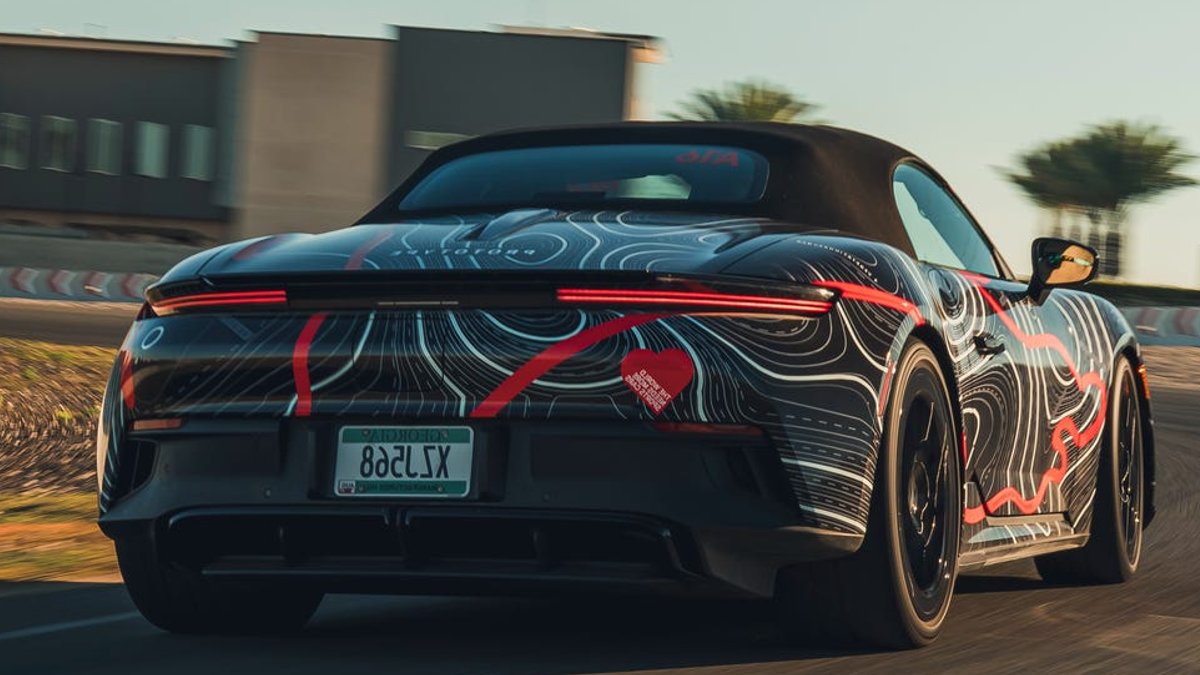
The upcoming Porsche 718 Boxster EV joins a growing group of electric cars that simulate an internal-combustion engine and transmission. A prototype was test-driven to evaluate how the artificial sound contributes to the driving experience.
E-Shift sound system
The vehicle uses Porsche’s “E-Shift” system, first seen in the Taycan, which can be enabled or disabled with a steering-wheel button. The simulated engine draws inspiration from the 3.4-liter naturally aspirated flat-six that powered the 981-generation Boxster.
“It was a big discussion in our company,” said Dr-Ing. Sebastian Lefevre, team lead for advanced driver assistance systems 718. “From our point of view, the 4.0 engine is a little bit too soft in the sound. In our company, the 981 GTS sound, six-cylinder, was a little bit louder, and it would also feel more popular and familiar with our old customers.”
To recreate the engine note, engineers placed two speakers inside the cabin. They recorded microphones positioned throughout the vehicle while sweeping the full rpm range, then replayed the data through the speakers after calibrating the output.
An exterior speaker sits behind the seats and activates when the roof is retracted. Its purpose is to mimic a mid-engine layout by projecting sound from behind the occupants, and the system raises interior volume with the top down.
In practice, the external speaker produces faint back-fire sounds during downshifts, but it does not replicate the resonance of a real exhaust echoing off surrounding terrain.
Simulated performance features
Mercedes-AMG currently leads the market with seat-integrated exciters that generate authentic NVH cues. The Boxster EV prototype, however, relies solely on its speakers to create the illusion of engine noise.
When launch control is engaged, the car pulses electric-motor torque to suggest an imminent start, and it allows the tachometer to climb to an artificial 8,000-rpm redline. The instrument cluster, borrowed from the 981 Boxster GTS, traditionally marks red at 7,600 rpm, giving the EV an extra 400 “fake” revs.
Despite the higher displayed revs, Porsche does not emulate the flat-six torque curve. The single electric motor delivers peak power at any speed, while the virtual gearbox steps through seven simulated gears as velocity changes.
Shift behavior follows the selected drive mode, offering manual or automatic options typical of Porsche’s PDK transmissions. Drivers also hear a distinct tonal shift when the throttle is released, mirroring the acoustic cue of a real 3.4-liter engine.
Driver experience
The simulated sound adds a familiar auditory cue for long-time Porsche owners, reinforcing the brand’s heritage while the car remains fully electric. The interior speakers provide a consistent engine note, and the optional exterior speaker enhances the feeling of a mid-engine sports car when the top is down.


