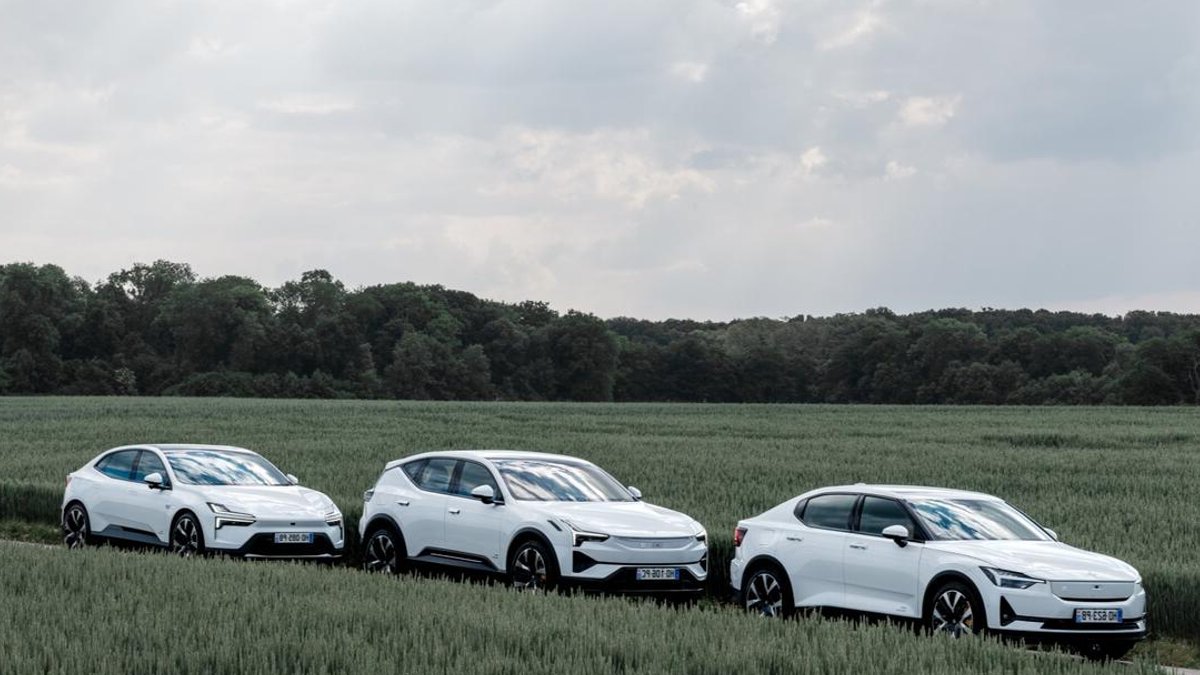
Polestar has spent the past 18 months reshaping its UK fleet operation as the electric vehicle brand moves from being an emerging challenger into a more established force in the fleet market. The transformation has involved expanding its fleet team, strengthening customer and after-sales support, developing its physical network and building a used-car operation that is increasingly important to the economics of the business.
Sarah Tottle, Polestar’s head of fleet, says the priority has been to ensure the infrastructure behind the brand keeps pace with its rapid growth. The scale of that growth is significant, with Tottle saying between 2024 and 2025 the business recorded almost 100% year-on-year growth, while 80-90% of its sales are still made through fleet channels.
Building a fleet operation to match growth
When Tottle joined Polestar around 18 months ago, the UK fleet operation had four fleet sales managers. They were covering a broad range of responsibilities, including leasing company and corporate relationships. The team has since doubled in size, with dedicated roles and functions designed to make the business easier for fleet customers and leasing companies to work with.
One of the key changes has been the creation of dedicated support for contract hire and leasing relationships, alongside a fleet operations manager who acts as a link between customers and Polestar’s internal support operation. The objective, says Tottle, is straightforward: to be “easy to do business with”.
Polestar has also restructured its fleet support operation around different order channels, using dedicated teams for platforms including LeaseLink and Fleet Procure. For Tottle, the changes have been about more than simply adding headcount as volumes have increased. “You can’t keep doubling the amount of resource that you’ve got,” she says. “So actually, it is about working smarter.”
Putting greater focus on the life of the vehicle
The company has established an In Life Fleet Support function, with dedicated employees managing issues affecting fleet vehicles and ensuring information flows between drivers, leasing companies, fleet management companies, brokers and Polestar. That becomes particularly important when technical or software issues arise.
For a conventional retail customer, resolving an issue may involve one driver and the manufacturer. A fleet vehicle can have several stakeholders, all of whom need to know what is happening. Tottle says the new function is designed to prevent those different parties from working independently and potentially duplicating requests or communications.
Read Also: Foliage overgrowth blamed for speeding accidents
The move follows increased attention on customer experience as Polestar’s sales have grown. That is especially relevant for a relatively young EV brand that has had to deal with software-related challenges on some early vehicles. Tottle is clear that problems can occur with any manufacturer, but believes the key differentiator is how quickly and effectively they are resolved.
Used cars become increasingly important
The growth of Polestar in the UK is also changing the importance of the pre-owned market. Tottle describes used cars as “fundamental” to the company’s future, particularly because a healthy used-car market supports residual values and makes the new-car proposition more competitive. The scale of the change is already visible, with Polestar selling almost as many pre-owned cars in the first half of this year as it did during the whole of last year.
Polestar is also trying to tackle one of the biggest barriers to used EV adoption: uncertainty. Its pre-owned proposition includes battery State of Health information, warranties and continued software support through over-the-air updates. The latter is particularly relevant to an EV brand built around connected technology.
As Polestar continues to expand its operations, its focus on used cars and customer experience will play a significant role in its future success. With the introduction of new models, such as the Polestar 5 and the Polestar 4 SUV, the brand is well-positioned to appeal to a broader range of customers, including those in the fleet market.
Polestar operated as a one-model brand for four years, with the 2 proving fiercely popular in the corporate space. The introduction of the 3 and 4, last year, gave the brand a much-needed boost to its line-up. As such, the 4 became its best-seller, while the 3 expanded its remit into the premium SUV space.
In 2027, Polestar will introduce the next-generation 2, representing the first full evolution of one of its models. Then, the Polestar 7 will arrive in 2028. This year saw the debut of the 5 and the 4 SUV, the latter of which was developed at record pace to meet customer demand for a more practical version.


