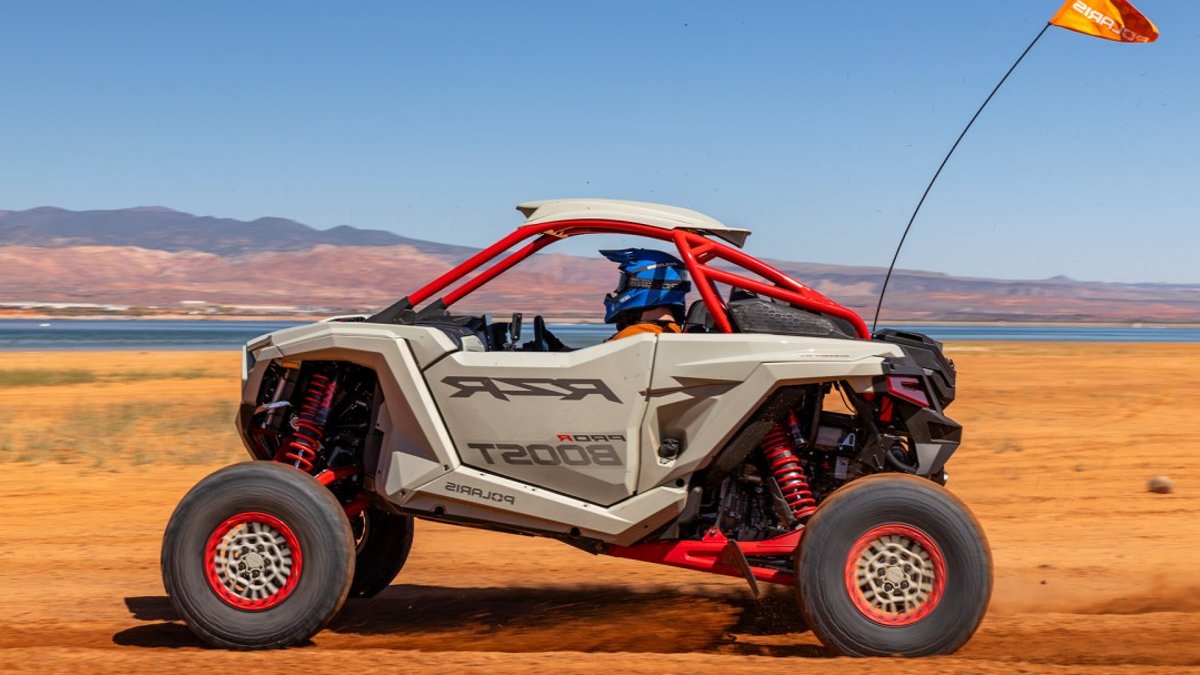
Performance side-by-sides are evolving beyond their utilitarian roots. Modern off-road machines now push output levels previously seen only in passenger cars. This shift represents a significant change for the segment, as manufacturers move toward high-horsepower sports car engines.
Power Gains in the Field
The KTM X-Bow Arrow demonstrates the capability of this approach. It uses an Audi 2.0-liter turbo four-cylinder. The base model produces 280 horsepower, while the Black Limited Edition version reaches 330 hp. This output far exceeds the capabilities of traditional side-by-side engines.
Polaris has also experimented with this technology. The RZR Pro R features a 2.0-liter engine adapted from the Slingshot. The naturally aspirated version generates 225 hp. Polaris later added a Garrett turbocharger to push the total to 275 hp. Work models still exist, of course, but today’s performance models would’ve been unimaginable some 20 years ago.
Concepts and Future Potential
Toyota is currently displaying a Scion UTV concept at auto shows. The vehicle uses a Tacoma TRD Pro powertrain. It features a turbo 2.4-liter hybrid with an eight-speed automatic. This setup delivers 326 hp and 465 lb-ft of torque.
Existing brands can adopt similar technology to compete. Can-Am uses a 1.63-liter Rotax three-cylinder engine that makes 350 hp. Kawasaki offers a supercharged, 1.5-liter four-cylinder producing 310 hp. Yamaha possesses a supercharged, 1.8-liter four-cylinder used in personal watercraft, which could also serve this purpose.
While these engines come from watercraft or snowmobile platforms, the displacement and torque figures allow them to rival the largest sport utility vehicles. The technology is available, and the market is willing to pay for it. The KTM X-Bow Arrow Black Limited Edition currently carries a price tag of $98,600. If the other brands want to keep up, they’ll have to add way more boost to their existing 999cc engines or follow Polaris and KTM X-Bow’s lead.
Trail Safety Concerns
As these vehicles become faster, the disparity between performance and safety equipment remains a concern. The raw speed available in a modern side-by-side requires matching safety measures. Manufacturers must ensure that rollover protection and braking systems evolve alongside the powertrain upgrades. Manufacturers like BRP have access to engines that could compete, while others like Yamaha have the capacity to develop similar high-output units. The market is forming that welcomes top-shelf pricing, so long as the speed is top-shelf as well.


