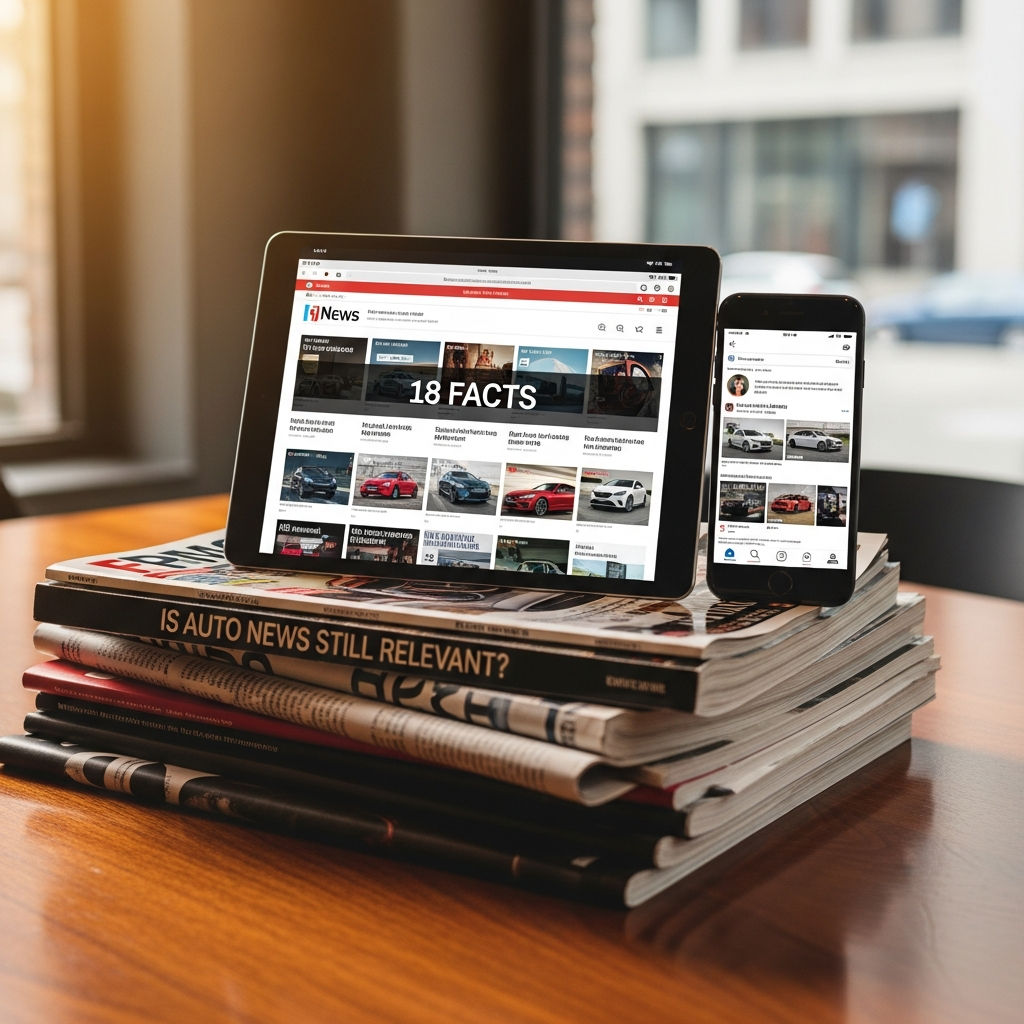
The Evolving Landscape of Automotive Journalism
For decades, automotive news was the domain of glossy magazines and Sunday morning television shows. Car enthusiasts would wait a full month for the latest performance figures or a glimpse of a prototype caught in “spy shots.” However, in the age of instant social media updates and YouTube influencers, many wonder: Is auto news still relevant? The answer is a resounding yes, but the medium and the message have undergone a radical transformation.
Today, cars are no longer just mechanical tools for transportation; they are sophisticated “computers on wheels.” As the industry shifts from internal combustion engines (ICE) to electric vehicles (EVs) and autonomous technology, the need for accurate, timely, and expert-driven news has never been higher. Whether you are a buyer, an investor, or an enthusiast, staying informed is the difference between making a smart purchase and a costly mistake.
Is Auto News Still Relevant? 18 Facts You Need to Know
To understand why automotive journalism remains a pillar of the global economy and consumer culture, we must look at the specific roles it plays in today’s world. Here are 18 facts that prove auto news is more relevant than ever.
1. The Rapid Transition to Electric Vehicles (EVs)
The shift to electrification is the biggest change in the industry in over a century. Consumers rely on auto news to understand range anxiety, battery degradation, and the difference between various charging standards like NACS and CCS. Without news outlets, the average consumer would be lost in a sea of technical jargon.
2. Critical Updates on Vehicle Safety and Recalls
Safety is the primary concern for most families. Auto news outlets are the first to report on massive recalls, from Takata airbags to software glitches in semi-autonomous driving systems. This information is literally a matter of life and death, making journalistic reporting an essential public service.
3. Monitoring the Used Car Market Volatility
In recent years, used car prices have fluctuated wildly due to supply chain issues and chip shortages. Auto news provides “market watch” reports that help buyers decide whether to pull the trigger on a purchase or wait for prices to cool down.
4. Demystifying Autonomous Driving Technology
With companies like Tesla, Waymo, and Cruise pushing the boundaries of self-driving tech, there is a lot of misinformation. Auto news provides the necessary skepticism and testing to tell consumers what these systems can—and cannot—actually do safely.
5. Real-World Range and Efficiency Testing
Manufacturer-stated MPG or EV range is often based on ideal laboratory conditions. Auto news outlets conduct “real-world” tests at highway speeds and in cold weather, providing a realistic picture of what a driver can expect from their vehicle.
6. Impact of Global Geopolitics on Local Prices
Whether it’s trade wars with China over EV subsidies or oil production cuts in the Middle East, global news directly impacts the price at the pump and the dealership. Auto news connects these dots for the average consumer.
7. The Rise of Software-Defined Vehicles (SDVs)
Modern cars receive “over-the-air” (OTA) updates that can change the car’s horsepower, braking distance, or infotainment features overnight. Keeping track of these software versions is a new and vital branch of automotive journalism.
8. Guiding the Research Phase of the Buying Journey
Statistics show that over 80% of car buyers start their journey online. Expert reviews and comparison articles in auto news outlets serve as the primary research tool, replacing the traditional “browsing the lot” experience.
9. Fact-Checking “Influencer” Hype
While social media influencers provide entertainment, they are often paid by manufacturers to promote specific models. Independent auto news outlets provide the necessary objective critique that balances the “hype” with reality.
10. Tracking Environmental Regulations
Governments worldwide are setting “end dates” for the sale of gasoline cars. Auto news tracks these legislative changes, helping consumers understand if the car they buy today will be legal to drive or easy to sell in ten years.
11. Updates on the Global Semiconductor Crisis
The “chip shortage” became a household term because of auto news. Understanding supply chain logistics helps consumers understand why certain features (like heated seats or navigation) might be missing from new models on the lot.
12. The Evolution of Infotainment and Connectivity
For many modern buyers, the dashboard screen is more important than the engine. Auto news covers the latest in Apple CarPlay integration, Android Automotive OS, and in-car subscription services, which is a growing trend in the industry.
13. Financial News for Investors
The automotive sector is a massive part of the stock market. From the valuation of EV startups like Rivian and Lucid to the quarterly earnings of giants like Toyota and GM, auto news is a vital branch of financial journalism.
14. Promoting Car Culture and Enthusiast Communities
Auto news isn’t just about utility; it’s about passion. Coverage of classic car auctions, restoration trends, and motorsport (like Formula 1 or WEC) keeps the enthusiast community connected and engaged.
15. Analysis of Insurance Rate Fluctuations
As cars become more expensive to repair due to high-tech sensors and cameras, insurance premiums rise. Auto news outlets often analyze which models are the cheapest or most expensive to insure, influencing purchasing decisions.
16. Reporting on the Charging Infrastructure
For EV adoption to work, the infrastructure must exist. Auto news tracks the rollout of charging networks (like Electrify America or Tesla Superchargers), informing drivers where they can and cannot travel with ease.
17. Long-Term Reliability Data
A car might look great in the showroom, but how does it hold up after 50,000 miles? Auto news outlets often perform “long-term fleet tests,” giving readers insight into the durability and maintenance costs of specific models over several years.
18. Highlighting Design and Aesthetic Trends
Automotive design reflects broader cultural shifts. News outlets document the move from sedans to SUVs, the minimalism of modern interiors, and the use of sustainable materials like “vegan leather,” helping consumers find a vehicle that fits their lifestyle and values.
The Shift from Print to Digital Experience
While the *relevance* of auto news is higher than ever, the *delivery* has changed. The decline of traditional print magazines does not mean the death of the medium; rather, it represents an evolution. Today’s auto news is multi-channel. A single story might start as a breaking news tweet, follow with a detailed technical article, and conclude with a 4K video review showing the car in motion.
This digital shift has made auto news more interactive. Readers can now use “build and price” tools directly within news articles or participate in comment sections to share their own ownership experiences. This “crowdsourced” layer of information adds a new dimension of relevance that print could never achieve.
Why Traditional Expertise Still Matters
In an era of “citizen journalism,” the professional auto journalist remains vital. Evaluating a car’s handling, suspension tuning, and build quality requires a baseline of comparison that only comes from driving hundreds of different vehicles. Professionals can detect “NVH” (Noise, Vibration, and Harshness) issues that an amateur might miss, and they have the industry contacts to get the “why” behind a manufacturer’s decision.
Furthermore, as automotive technology becomes more proprietary and complex, the “watchdog” role of the media becomes paramount. Whether it is uncovering “Dieselgate”-style emissions scandals or pointing out deceptive marketing regarding “Full Self-Driving” capabilities, professional journalists hold billion-dollar corporations accountable.
Conclusion: The Future of Auto News
Is auto news still relevant? Absolutely. In fact, as we enter the most volatile and innovative period in transportation history, it is more indispensable than it has ever been. We are moving toward a world of autonomous taxis, solid-state batteries, and carbon-neutral fuels. To navigate this future, consumers and industry professionals alike need a reliable map.
Auto news provides that map. It filters the noise, fact-checks the marketing, and provides the context necessary to understand how we move from point A to point B. As long as people need to travel, and as long as cars remain a symbol of freedom and a major financial investment, the demand for high-quality automotive journalism will continue to thrive.