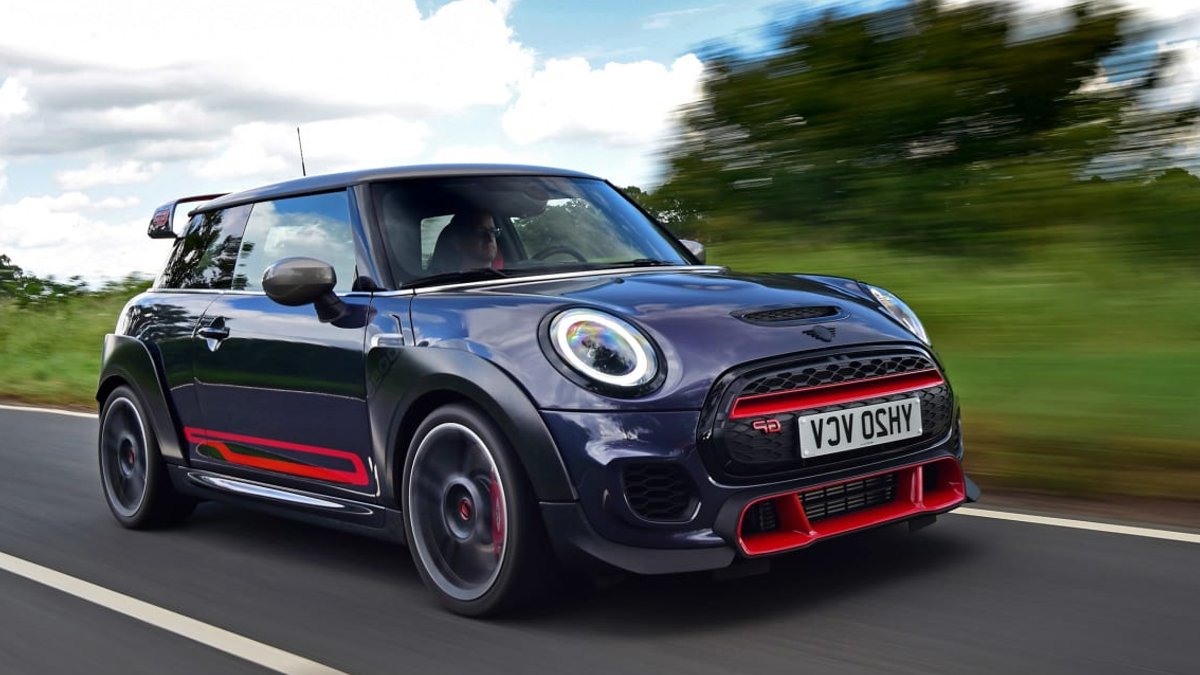
Mini has released the Works GP 2020, a high-performance version of the F56-generation hatchback that aims to rival hot hatches like the Toyota GR Yaris. This model marks the first GP iteration since 2013, featuring a significant power increase and a distinct visual overhaul that sets it apart from standard Cooper S and John Cooper Works models. The company produced 3,000 units globally, though only 575 are available for the UK market, making the car a rare commodity for enthusiasts.
The latest Works GP comes equipped with an automatic transmission only, utilizing an eight-speed torque converter rather than a dual-clutch gearbox. It is powered by BMW’s 2.0-liter B48 turbocharged four-cylinder engine, producing 302 horsepower and 332 pound-feet of torque. Mini claims a 0-62 mph time of 5.2 seconds, with a top speed limited to 164 mph. This output matches the current BMW M135i, placing the GP in a class above smaller hot hatches like the Fiesta ST, though it sits in a similar weight bracket at 1,255 kg.
Despite the impressive numbers on paper, the driving experience presents a mixed bag. The automatic transmission is functional but lacks the engagement of a manual gearbox, with sluggish paddle response that disconnects the driver from the action. The engine feels revvier and more eager in this application compared to other models using the same powerplant, delivering a strong auditory experience through the twin exhaust pipes.
Chassis and Handling
Mini has sharpened the GP’s chassis with bespoke springs and dampers that lower the ride height by 10mm compared to other JCW models. The suspension uses struts and a multilink layout with increased camber and stiffer engine mounts for better body control. On smooth surfaces, the car feels tight and responsive, offering minimal body roll and precise steering.
Related: Mitsubishi Pajero to debut globally this autumn
However, the ride quality is firm and bouncy, often feeling like a “pogo” effect on uneven tarmac that prevents the car from settling comfortably. Handling is where the GP struggles most. The aggressive limited-slip differential combined with sensitive steering and throttle inputs can make the car feel unruly, especially on bumpy roads. The front tires often lose grip, triggering traction control interventions that tug at the steering wheel. This disconnect between the driver’s inputs and the car’s reactions makes the GP feel like it is fighting against itself rather than working in harmony with the pilot.
Interior and Exclusions
The cabin of the Works GP is stripped down for weight reduction and style. Rear seats are removed, and a substantial body cross-brace is installed across the rear cabin. The interior features a muted color scheme that contrasts with the bright red arches made of carbon-fiber-reinforced plastic. The steering wheel and gearshift paddles utilize 3D printing for detailed detailing, and the driver benefits from a fully digital instrument display.
Price and Rivals
Mini has priced the Works GP at £33,895, which seems reasonable given the car’s bespoke components and high performance. In an era where hot hatchbacks like the Honda Civic Type R and Mercedes-AMG A35 can exceed £40,000, the GP offers a competitive price point. However, rivals such as the Civic Type R and Renault Megane RS offer manual transmission options and better road manners, making them easier to live with despite the Mini’s superior straight-line speed.


